capitalism · September 20, 2026
Capitalism didn’t fail. It got privatized by the Oligarchy.
The American economy isn’t broken. It’s closed, and the receipts are held by a small group of billionaires who don't care about you.

Something feels off about the American economy. You can work full-time, pick up extra hours, earn another credential, and still find yourself struggling to get ahead. The paycheck improves, but so does the rent. Insurance costs more, groceries eat up a larger portion of the budget, and buying a home can feel like a goal that keeps moving further away.
Meanwhile, the stock market reaches new highs, corporate earnings make headlines, and the country's wealthiest households watch the value of their assets climb. There is nothing inherently wrong with people becoming wealthy. The question is why economic growth can produce such different experiences for people living in the same country.
Part of the answer lies in the distinction between earning money and owning the assets that generate it. Another part lies in how competition, corporate ownership, and political decisions shape the opportunities available to everyone else. Understanding those differences tells us considerably more about the American economy than another argument about whether capitalism is good or bad.
What actually happened to the American market?
Competition is supposed to be one of the defining features of a market economy. A business earns customers by offering something better, cheaper, or more useful than its competitors. When it stops delivering, another company has an opportunity to take its place. That competitive pressure encourages innovation, restrains prices, and gives consumers alternatives.
The arrangement becomes more complicated when a small number of companies control a substantial share of an industry. Large businesses can achieve efficiencies that smaller competitors cannot, but concentration can also create opportunities to raise prices, dictate terms to suppliers, and make it difficult for new businesses to enter the market.

Consider the prescription drug industry. According to a 2024 Federal Trade Commission report, the six largest pharmacy benefit managers handle nearly 95% of prescriptions filled in the United States. These companies negotiate with drug manufacturers, insurers, and pharmacies, giving them considerable influence over how medications are distributed and what patients ultimately pay.
The FTC raised concerns that this concentration could disadvantage independent pharmacies and increase costs for patients. The industry argues that its size provides negotiating power that helps lower drug prices. Both arguments illustrate why the structure of a market matters. A company can use its scale to become more efficient, but the same scale can make it harder for customers and competitors to find alternatives.
Concentration is not equally severe in every American industry, and a large company is not automatically engaging in anticompetitive conduct. Still, understanding where competitive pressure has weakened is essential to understanding why some businesses enjoy enormous bargaining power while others struggle to survive.
When owning the company becomes more profitable than working for it

There is another important development in the American economy, one that becomes especially visible when the stock market is performing well. Over time, financial assets have become a major source of wealth for households that own substantial investments, creating opportunities for their fortunes to grow independently of their wages.
The Federal Reserve's household wealth data shows that ownership of corporate equities is heavily concentrated among wealthier Americans. This means that when stock prices rise, the financial benefits are not distributed evenly across the population. A worker with a modest retirement account may benefit, but the increase in wealth experienced by someone with a multimillion-dollar portfolio will be considerably larger.
Corporate decisions also influence how those gains are distributed. When a business produces a healthy profit, management must decide whether to expand operations, increase employee compensation, develop new products, pay dividends, or repurchase its own shares. Stock buybacks can be a legitimate way to return excess capital to investors, but they also raise questions about how companies balance their obligations to shareholders with long-term investment and employee compensation.
It's entirely possible for a company to report excellent financial results while its employees experience little improvement in their standard of living. That doesn't necessarily mean the company is doing something illegal or that its success is undeserved. It means the financial health of a business and the financial circumstances of the people who work there are two different things, even when they appear in the same economic headlines.
Political influence adds another layer
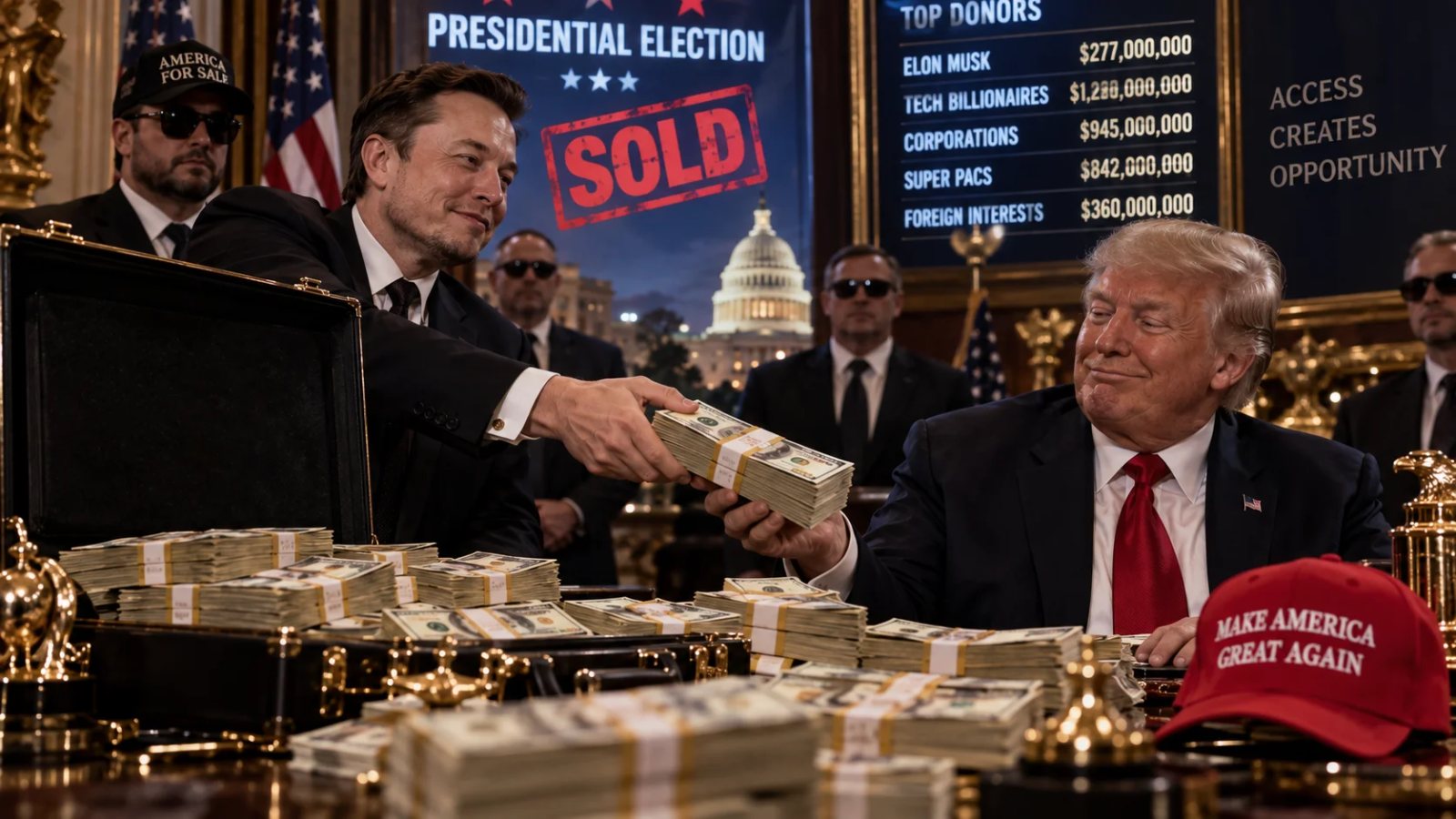
Corporate power does not exist in isolation from government. Businesses operate under laws governing competition, taxation, labor, trade, and financial markets, which makes political decisions an important part of their economic environment. Companies and industry associations consequently devote substantial resources to lobbying and political advocacy.
The role of money in American politics has been debated for decades, but two court decisions in 2010 significantly changed the campaign finance landscape. In Citizens United v. FEC, the Supreme Court held that the government could not restrict independent political expenditures by corporations on the basis of their corporate identity. Later that year, SpeechNow.org v. FEC helped establish the legal framework under which independent-expenditure-only committees, commonly known as super PACs, can accept unlimited contributions.
These decisions did not eliminate restrictions on direct corporate contributions to federal candidates. They did, however, expand the ability of wealthy donors and organizations to finance political communications independently of campaigns.
Supporters argue that political spending is a form of protected expression and that the government should not restrict speech based on a speaker's wealth or organizational structure. Critics contend that unlimited independent spending gives wealthy individuals and organizations disproportionate influence over the political conversation, even when no direct coordination with a candidate occurs.
Spending money on politics is not, by itself, evidence of corruption. Nevertheless, the scale of modern political fundraising makes it important to examine who finances political campaigns, what policies those donors support, and whether government decisions create advantages for particular industries.
These questions apply across party lines because the underlying relationship between government and business extends far beyond any single administration.

The second Trump administration inherited these conditions
Donald Trump's return to the White House in January 2025 brought renewed attention to deregulation, tariffs, domestic manufacturing, and the federal government's relationship with American businesses. These policies have generated substantial disagreement about their likely effects on workers, consumers, and corporate profitability.
Tariffs provide a particularly useful example. The administration has defended them as a means of protecting American industries, encouraging domestic production, and strengthening the country's position in trade negotiations. Supporters argue that businesses may be more willing to invest in domestic manufacturing when imported products face additional costs.
Tariffs benefit certain domestic producers while increasing expenses for other companies who depend on imported materials and for consumers who purchase imported goods. In an August 2026 analysis, Yale's Budget Lab estimated that the tariff policies then in effect would ultimately raise consumer prices by approximately 0.7%, equivalent to an average household cost of about $1,100 annually. These are estimates rather than observed costs for every household, and the consequences vary considerably across industries.
Professional sports offers a revealing example

The business of professional sports provides an unusually visible example of the relationship between labor, ownership, and financial success. Athletes generate enormous commercial value through their performances, but the money surrounding a major sporting event flows through a much larger network of team owners, leagues, broadcasters, sponsors, equipment manufacturers, and advertising partners.
When a superstar signs a contract worth hundreds of millions of dollars, the figure attracts attention because it represents an extraordinary amount of money for an individual to earn through athletic performance. What receives less attention is the business structure that makes such a contract possible.
Sports franchises own valuable commercial assets, leagues negotiate broadcast agreements, and networks purchase the rights to distribute games to enormous audiences. Advertisers then pay to reach those audiences. The athlete is central to the product, but the athlete is also participating in a commercial enterprise whose ownership and management extend far beyond the playing field.
The commercial responsibilities of athletes have expanded as well. A successful player may earn money from sponsorships, social media, merchandise, appearances, and licensing agreements. This creates valuable opportunities, particularly for athletes whose earning potential might otherwise be limited by the compensation available in their sport. It can also introduce additional demands involving image rights, promotional obligations, and the management of a public persona.

For female athletes, whose commercial opportunities can differ substantially from those available in men's professional leagues, endorsements and personal branding may represent an especially important source of income. These arrangements can provide financial independence, although individual agreements differ in the control they grant athletes over the use of their names and images.
The financial success of an athlete tells us how much that individual has earned. Understanding the business behind the contract requires examining who owns the enterprise, controls its commercial rights, and receives the revenue generated around it.
That distinction extends well beyond professional sports. Musicians, actors, online creators, and independent businesses face similar questions about ownership, distribution, and the commercial value of their work. An individual can earn an impressive income while remaining dependent on a much larger organization to reach customers or audiences.

Is the American market really closed?
Describing the American economy as a completely closed system would overlook substantial evidence to the contrary. New businesses continue to emerge, people change careers, entrepreneurs develop valuable products, and millions of Americans participate in financial markets through retirement savings and other investments.
Recent income data also complicates the argument that ordinary households have experienced no improvement. The U.S. Census Bureau reported that real median household income reached $87,460 in 2025, a 2.6% increase from the previous year and the highest inflation-adjusted figure in its historical series.
That improvement matters, but it doesn't eliminate the differences in financial circumstances between households. Median income describes the household in the middle of the income distribution. It cannot tell us whether someone earning substantially less can comfortably afford housing, whether a family is accumulating wealth, or whether a worker has enough savings to survive an unexpected expense.
Economic opportunity is also shaped by the resources people already possess. Someone starting a business with access to capital, established relationships, and a financial cushion can tolerate risks that would be difficult for a person living paycheck to paycheck. Both may have the legal freedom to open a company, but their practical ability to pursue that opportunity is different.

This is where discussions about competition, labor rights, taxes, and ownership become relevant. Antitrust enforcement addresses conduct and mergers that threaten competition. Labor laws shape the relationship between employers and employees. Tax policy affects the distribution of income and wealth, while retirement systems and employee ownership arrangements influence how households participate in asset growth.
Each approach involves trade-offs, and there are legitimate disagreements about how these policies should be designed. The essential starting point is recognizing that economic opportunity involves more than the theoretical right to participate in a market. It also depends on access to capital, competitive conditions, bargaining power, and the ability to retain some portion of the value a person helps create.
The bigger question is who benefits when the economy succeeds

It's understandable that people become frustrated when they hear about record corporate profits and rising stock prices while struggling to cover ordinary expenses. Those experiences can appear contradictory, particularly when the broader economy is described as strong.
They aren't necessarily contradictory at all. Economic growth can increase total national wealth without producing identical gains for every household. A person whose wealth is concentrated in financial assets experiences the economy differently from someone who depends almost entirely on wages, just as a business with considerable market power operates under different conditions from a small company trying to establish itself.
The American economy is not a single experience shared equally by everyone who participates in it. Its performance depends on what we measure, and its benefits depend in part on where people stand within it. Until discussions about economic success account for those differences, a rising stock market and a struggling household will continue to tell two very different stories about the same country.